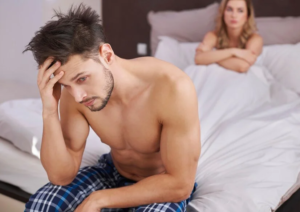
Sexual Performance Anxiety: Understanding the Problem
Sexual performance anxiety can affect a man's confidence, sexual response and ability to enjoy intimacy. Worry about erections, ejaculation, satisfying a partner, body image or previous sexual experiences can make sexual situations feel increasingly stressful.
The important point is that sexual difficulties are not always caused by a physical problem alone. Anxiety, stress, relationship concerns and previous experiences can also influence sexual function.
Sexual performance anxiety is manageable, particularly when the factors contributing to it are properly identified and addressed.
What Is Sexual Performance Anxiety?
Sexual performance anxiety refers to significant worry, fear or self-consciousness about sexual performance that interferes with sexual interest, arousal, erection, ejaculation or overall sexual satisfaction.
A man may experience:
- Fear of losing an erection
- Worry about satisfying his partner
- Excessive thoughts during intimacy
- Fear of ejaculating too quickly
- Concern about penis size or appearance
- Difficulty becoming fully aroused
- Difficulty maintaining an erection in partnered situations
- Avoidance of sexual intimacy
- Reduced confidence after a previous difficult sexual experience
Performance anxiety is not necessarily a diagnosis on its own. It can occur alongside erectile dysfunction, premature ejaculation, low libido, relationship difficulties or other anxiety-related concerns.
How Anxiety Can Affect Sexual Performance
Sexual arousal involves both physical and psychological processes. When a person becomes highly anxious or focused on whether they are "performing correctly," it can become harder to remain relaxed and engaged in the experience.
This can create a repeating cycle:
Worry → Increased self-monitoring → Sexual difficulty → Fear of repeating the problem → More anxiety
For example, a man who experiences difficulty maintaining an erection once may become worried that the same thing will happen again. During the next sexual encounter, he may focus heavily on his erection rather than the experience itself, which can further increase anxiety.
Breaking this cycle may require more than simply telling yourself to "relax."
Common Causes and Triggers of Sexual Performance Anxiety
Several factors may contribute to performance anxiety.
| Trigger | Trigger |
|---|---|
| Previous sexual difficulty | Creates fear that the same problem will happen again |
| Fear of not satisfying a partner | Increases pressure and self-monitoring |
| New relationship | Uncertainty or self-consciousness may increase anxiety |
| Body-image concerns | Can make a person focus excessively on appearance |
| Erectile concerns | Fear of losing an erection can itself increase pressure |
| Premature ejaculation concerns | Worry about ejaculation timing may interfere with enjoyment |
| Relationship stress | Conflict or poor communication can affect intimacy |
| General life stress | Work, financial or personal stress may reduce relaxation |
| Previous negative sexual experience | May influence expectations during future intimacy |
| Unrealistic sexual expectations | Media and pornography may contribute to unrealistic comparisons for some people |
Not every trigger affects every person in the same way. A proper assessment helps identify the factors relevant to the individual.
Can Performance Anxiety Cause Erectile Problems?
Anxiety can contribute to difficulty getting or maintaining an erection, particularly when erection problems occur mainly in certain sexual situations.
For example, some men may notice that erections occur normally during sleep or masturbation but become difficult during partnered sex. This pattern can suggest a psychological or situational component, although it does not by itself prove that anxiety is the only cause.
Physical and psychological factors can also coexist.
If erection problems are persistent, a medical evaluation is important rather than assuming that anxiety is the only explanation.
Can Performance Anxiety Affect Ejaculation?
Yes. Anxiety surrounding sexual performance may contribute to ejaculation difficulties in some men.
Depending on the individual, anxiety may be associated with:
- Ejaculating sooner than desired
- Difficulty delaying ejaculation
- Difficulty reaching ejaculation
- Difficulty reaching orgasm
- Increased worry about sexual performance
The underlying cause should be assessed rather than assuming that anxiety is responsible for every ejaculation problem.
How Performance Anxiety Can Affect Relationships
Sexual anxiety can affect more than sexual activity itself.
A man may begin avoiding intimacy because he is afraid of experiencing another difficult encounter. A partner may misunderstand this withdrawal and believe that attraction or interest has decreased.
Over time, this can contribute to:
- Reduced intimacy
- Relationship tension
- Avoidance of sexual situations
- Reduced self-confidence
- Increased fear before future sexual encounters
Open communication can help reduce misunderstandings, while professional support may be useful when anxiety continues to interfere with intimacy.
Sexual Performance Anxiety Treatment in Nashik for Patients from Dhule
Treatment depends on what is contributing to the anxiety.
A sexual-health evaluation may consider:
1. Sexual and Medical History
The consultation may explore:
- When the problem started
- Whether it occurs every time or only in certain situations
- Erectile function
- Ejaculation concerns
- Sexual desire
- Previous sexual experiences
- Current medications
- Alcohol or substance use
- Relevant medical conditions
2. Psychological Factors
The assessment may also consider:
- Anxiety
- Stress
- Depression
- Fear of sexual failure
- Body-image concerns
- Relationship difficulties
- Previous negative sexual experiences
3. Physical Contributors
Because sexual difficulties can have physical as well as psychological causes, medical contributors should be considered where appropriate.
Testing is not automatically required for every person. Investigations depend on the symptoms and clinical assessment.
Treatment Options for Sexual Performance Anxiety
Cognitive Behavioural Therapy and Counselling
Cognitive and behavioural approaches can help identify unhelpful thoughts surrounding sexual performance and develop healthier responses to anxiety.
The focus may include:
- Identifying performance-related fears
- Reducing excessive self-monitoring
- Challenging unrealistic expectations
- Improving confidence
- Developing healthier coping strategies
Psychosexual Counselling
Psychosexual counselling focuses specifically on sexual concerns and may address psychological, emotional and relationship factors affecting sexual function.
It can be useful when anxiety is associated with:
- Erectile difficulties
- Ejaculation problems
- Relationship concerns
- Fear surrounding intimacy
- Previous negative sexual experience
- Sexual confidence issues
Psychosexual therapy may involve an individual or, where appropriate, a partner.
Sensate-Focus and Behavioural Techniques
In appropriate cases, structured exercises may help reduce the pressure to achieve a particular sexual outcome.
The emphasis can gradually shift from:
"I must perform successfully"
to:
"I can focus on connection, sensation and communication."
Such exercises should be introduced appropriately rather than treated as a one-size-fits-all solution.
Mindfulness and Relaxation Techniques
Some men find it difficult to remain present during intimacy because their attention becomes focused on questions such as:
- "Am I going to lose my erection?"
- "Am I satisfying my partner?"
- "How long will I last?"
- "What if it happens again?"
Breathing and mindfulness-based techniques may help reduce excessive self-monitoring and encourage greater awareness of the present experience.
Practical Ways to Reduce Sexual Performance Anxiety
Some everyday approaches may support treatment:
Communicate With Your Partner
Discussing worries openly can reduce misunderstandings and unnecessary pressure.
Avoid Treating Sex Like a Test
Sexual intimacy does not have to be measured by erection duration, penetration or ejaculation timing.
Reduce Excessive Self-Monitoring
Constantly checking whether you are "performing correctly" can make it harder to remain engaged in the experience.
Limit Alcohol as a Coping Strategy
Using alcohol specifically to reduce sexual anxiety can become counterproductive and may also affect sexual function.
Maintain Regular Physical Activity
Regular exercise can support general physical and psychological wellbeing.
Maintain Good Sleep
Poor sleep can contribute to stress and may affect overall sexual wellbeing.
Seek Professional Support When the Pattern Continues
If anxiety continues despite attempts to manage it yourself, professional assessment can help identify what is maintaining the problem.
Sexual Performance Anxiety Treatment in Nashik for Men from Dhule
Men from Dhule who are looking for sexual performance anxiety treatment can seek evaluation in Nashik.
The consultation can focus on understanding whether anxiety is the main contributor or whether erectile, ejaculation, hormonal, medication-related, relationship or other factors also need attention.
The page is specifically intended for patients from Dhule seeking sexual-health care in Nashik. It should not imply that the treatment centre is physically located in Dhule.
Patients from nearby areas may also seek sexual-health consultation in Nashik depending on their individual needs.
Confidential Sexual-Health Consultation
Sexual concerns can be difficult to discuss, particularly when they involve anxiety, erections, ejaculation or relationship concerns.
A clinical consultation should provide a respectful environment where the symptoms, concerns and relevant medical history can be discussed without unnecessary embarrassment.
The aim is to understand the problem first and then determine an appropriate treatment approach.
Performance Anxiety: Myths vs Medical Facts
| Myth | Medical Fact |
|---|---|
| "Performance anxiety means I am not attracted to my partner." | Anxiety and attraction are different issues. Performance difficulties do not automatically mean reduced attraction. |
| "Only men with serious sexual problems experience performance anxiety." | Anxiety can affect men with or without an underlying sexual disorder. |
| "I just need to relax." | Simply trying to relax may not be enough when anxiety has become a repeating pattern |
| "If I experienced one failed sexual encounter, it will keep happening." | One difficult experience does not necessarily predict future sexual performance. |
| "Performance anxiety is always psychological." | Physical and psychological factors can coexist, so persistent symptoms may require medical evaluation |
| "Medication alone always solves performance anxiety." | Medication may help some associated sexual difficulties, but the underlying anxiety may also need psychological or psychosexual support. |
Frequently Asked Questions
Q1. What is sexual performance anxiety?
Sexual performance anxiety is excessive worry or fear about sexual performance that interferes with sexual interest, arousal, erection, ejaculation or enjoyment.
Q2. Can performance anxiety cause erectile dysfunction?
Anxiety can contribute to erection difficulties in some men, especially when problems occur mainly in particular sexual situations. However, persistent erectile problems should be medically evaluated because physical and psychological causes can coexist.
Q3. How do I know whether my erection problem is anxiety-related?
A clinician may look at when the problem occurs, whether erections happen during sleep or masturbation, medical history, medications, relationship factors and other symptoms. This pattern can help identify possible psychological or situational contributors, but it cannot be diagnosed from one symptom alone.
Q4. Can performance anxiety cause premature ejaculation?
Performance anxiety may contribute to premature ejaculation in some men. Stress, relationship factors and other physical or psychological causes can also play a role.
Q5. Can performance anxiety reduce sexual desire?
Yes. Persistent worry about sexual performance can make intimacy feel stressful and may reduce sexual interest or enjoyment.
Q6. Can I have performance anxiety even if my partner is supportive?
Yes. A supportive partner can help reduce pressure, but anxiety may continue because of previous experiences, self-confidence concerns or an established pattern of fear and self-monitoring.
Q7. Does pornography cause sexual performance anxiety?
Pornography does not automatically cause performance anxiety. However, unrealistic expectations or comparisons with sexual content may contribute to anxiety for some people.
Q8. Can stress at work affect sexual performance?
Yes. General stress and anxiety can affect sexual interest and sexual function. The effect varies between individuals.
Q9. Do I need medication for performance anxiety?
Not necessarily. Treatment depends on the underlying problem. Counselling or psychosexual therapy may be appropriate, while medication may be considered when an associated sexual or medical problem requires it.
Q10. Can counselling really help with sexual performance anxiety?
Counselling and psychosexual therapy can help address anxiety, fear, relationship concerns, sexual misconceptions and behavioural patterns associated with sexual difficulties.
Q11. Do I need to bring my partner for consultation?
Not necessarily. An individual consultation can be a starting point. Partner involvement can be considered when relationship or communication factors are relevant.
Q12. How long does treatment take?
There is no single treatment duration for sexual performance anxiety. The timeline depends on the cause, severity, associated sexual problems and response to treatment.
Q13. Is sexual performance anxiety treatable?
Many men can improve when the factors contributing to the anxiety are identified and appropriately addressed. Treatment may involve psychological support, psychosexual counselling, behavioural strategies and, where appropriate, medical treatment for associated sexual difficulties.
Q14. When should I seek treatment for performance anxiety?
Consider professional help if anxiety is repeatedly affecting sexual activity, causing you to avoid intimacy, affecting your relationship or causing significant personal distress.
Yes. Patients from Dhule can seek sexual-health evaluation and treatment in Nashik. The consultation can assess performance anxiety as well as possible physical or psychological contributors to sexual difficulties.
When Should You Seek Professional Help?
Consider a professional consultation if:
- Anxiety occurs before or during most sexual encounters
- You repeatedly worry about losing an erection
- You are avoiding intimacy because of fear
- You experience repeated erection or ejaculation difficulties
- Sexual concerns are affecting your relationship
- You are using alcohol or other substances to feel more confident during sex
- The problem is causing significant distress
- You are unsure whether the problem is psychological, physical or both
Getting an assessment can help distinguish performance anxiety from other sexual-health conditions and identify an appropriate treatment approach.
Sexual Performance Anxiety Treatment for Patients from Dhule
If you are from Dhule and experiencing anxiety about sexual performance, you do not have to keep trying to manage the problem without understanding its cause.
A confidential sexual-health consultation in Nashik can help evaluate your symptoms, identify possible contributing factors and discuss suitable treatment options.
The focus is on understanding the individual problem rather than assuming that every sexual difficulty has the same cause.
Book a Confidential Consultation
If sexual performance anxiety is affecting your confidence, intimacy or relationship, schedule a consultation in Nashik for a proper evaluation and personalised treatment plan.
Patients from Dhule can seek sexual-health consultation in Nashik for performance anxiety, erectile difficulties, ejaculation concerns and related male sexual-health problems.
Book a Confidential Sexual-Health Consultation in Nashik